Formula-first skincare analysis No hype, clear context Affiliate links may be used Read our disclosure Human-reviewed editorial process Formula-first skincare analysis No hype, clear context Affiliate links may be used Read our disclosure Human-reviewed editorial process

10 Best Retinol Serums for Youthful, Radiant Skin
Deal Score0
Deal Score0

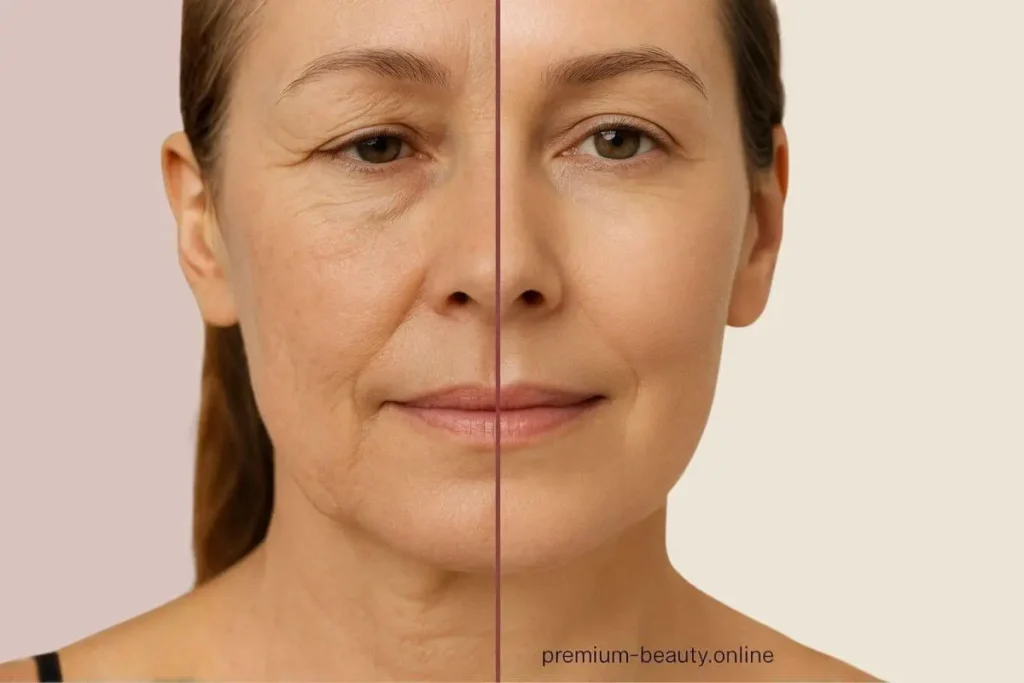
Retinol has a reputation for being the gold standard in cosmetic anti-aging, yet for beginners, choosing the best retinol serums can feel overwhelming. 

Between different strengths, textures and claims, it is easy to end up with a formula that is either too strong, or so gentle that it barely makes a visible difference. This guide brings structure and calm to that choice. It explains what retinol serums may realistically help improve, how to introduce them without upsetting the skin, and how to match formulas to different skin types.

Finally, it presents a curated list of ten carefully selected serums, each with clear strengths, ideal users, and realistic time frames, so readers can build a routine that feels both effective and sustainable.

What retinol serums can realistically do for your skin

For beginners, it helps to see retinol as part of a family rather than a miracle ingredient. Retinol belongs to the vitamin A group, which includes gentler cosmetic forms such as retinyl esters and stronger prescription forms such as tretinoin. In the skin, these molecules are gradually converted into retinoic acid, the active form that interacts with cell receptors.

Over the counter retinol serums sit on the gentler side of this spectrum. They may help improve the look of fine lines, uneven texture and dullness over time, but they do not work as quickly or as dramatically as prescription creams used under medical supervision.

Clinical research on topical retinoids supports their role in improving visible signs of photoaging, such as fine wrinkles and roughness, particularly for tretinoin and other prescription strength molecules. Cosmetic strength retinol has a smaller but meaningful body of evidence, with studies showing improvements in fine wrinkles, pigmentation irregularities and overall skin appearance after several weeks to months of consistent use, usually in concentrations from about 0.1 to 0.3 percent in well designed formulas.

These improvements are gradual, rely on regular use and depend on a supportive routine that includes daily sunscreen, as UV exposure can counteract many of the visible benefits. Results also vary between individuals, which is why even strong studies avoid promising exact percentages of wrinkle reduction.

Equally important is what retinol serums cannot realistically do. They cannot erase deep expression lines, tighten significantly lax skin or replace in clinic procedures such as lasers, fillers or radiofrequency devices. They also cannot compensate for daily habits that accelerate visible aging, such as unprotected sun exposure or smoking.

For beginners, a realistic approach is to view the best retinol serums as long term texture refiners and tone optimisers, not instant lifting treatments. When they are matched to the right skin type, introduced slowly and used alongside moisturisers and broad spectrum sunscreen, they can become one of the most efficient “backbone” steps in a night routine for maintaining a smoother and more radiant look over time.

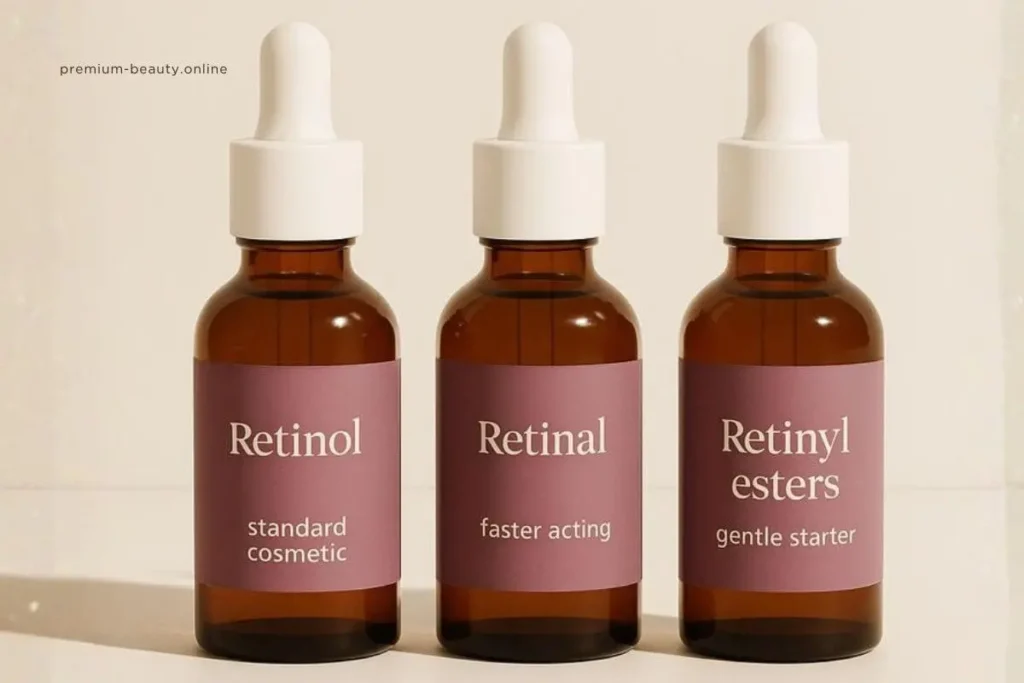
For a beginner, one of the most confusing parts of shopping for retinol is the vocabulary on the label. “Retinol serum” is often used as a catch all term, but in practice it can refer to several different vitamin A derivatives, each with its own balance of strength and gentleness. Classic retinol is the best known cosmetic form. It must be converted by the skin into retinaldehyde and then into retinoic acid before it can interact with receptors, which helps explain why it is milder than prescription creams that already contain retinoic acid.

Retinaldehyde, sometimes called retinal, sits one step closer to retinoic acid in this conversion chain, so it is usually considered more potent than retinol at equivalent percentages, yet still formulated for cosmetic use. Then there are retinyl esters, such as retinyl palmitate, which are further away in the chain and are usually gentler, but also slower to show visible changes.

In the last decade, brands have also introduced newer “retinoid complexes” and molecules sometimes marketed as next generation or granactive style retinoids. These are often derivatives like hydroxypinacolone retinoate (HPR), designed to bind retinoid receptors more directly while remaining in the cosmetic category.

Early data and brand led studies suggest they may provide retinoid like benefits with a slightly more forgiving irritation profile, although independent, head to head trials against well formulated retinol are still limited, so it is safer to view many of these claims as promising but not definitive. In addition, many modern serums rely on encapsulation and slow release delivery systems, where retinol or retinal is enclosed in a carrier that helps protect it from degradation and releases it gradually into the skin.

These systems aim to improve stability and reduce the risk of sharp irritation peaks by spreading the active’s impact over time.

For beginners choosing between these derivatives, the practical differences matter more than the chemical names. Classic retinol in a low to mid concentration is usually a reliable starting point when combined with soothing ingredients and a gentle introduction schedule.

Those with more resilient or experienced skin may enjoy the faster feel of retinaldehyde or a reputable HPR formula, especially when they are already comfortable with basic retinol. Very sensitive or reactive skin types might prefer gentler esters or a blend labelled as “retinol complex” that combines lower strength actives with calming components, understanding that results will be subtler and slower.

The key is not to chase the loudest claim on the box, but to align the derivative with current tolerance, lifestyle and willingness to be patient, knowing that even the best retinol serums work on the scale of weeks and months, not days.

How to choose the best retinol serum for your skin type

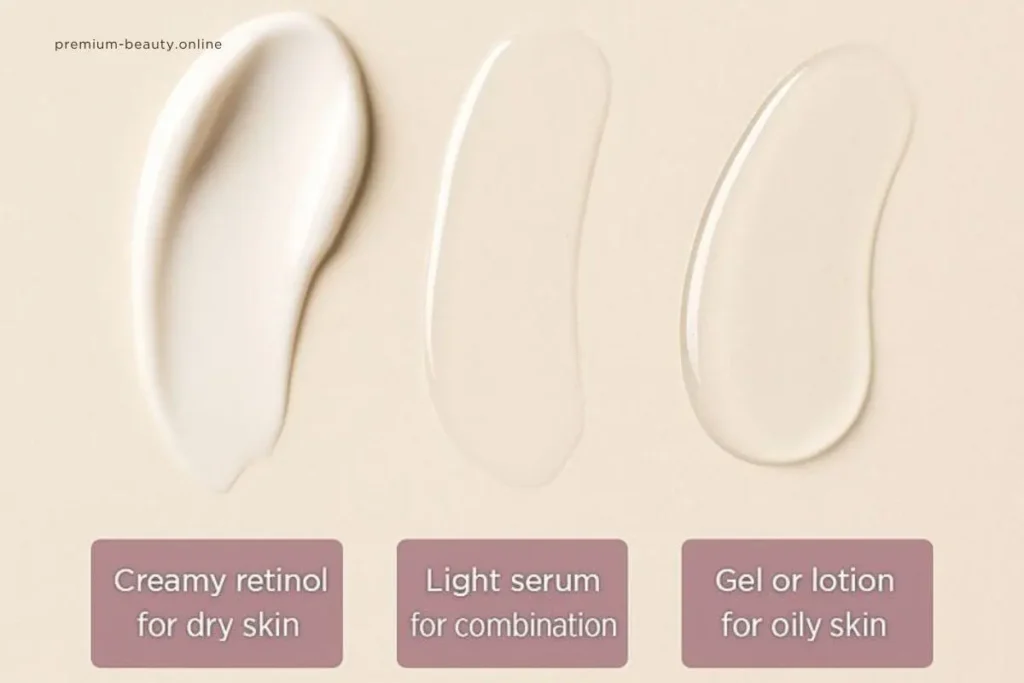
The starting point for choosing among the best retinol serums is an honest look at skin type and current barrier health. Oily or combination skin usually tolerates lightweight gel or fluid textures more easily, especially formulas described as noncomedogenic or designed for congestion-prone complexions.

These textures sit comfortably under other layers without feeling greasy and are less likely to exacerbate shine. Normal or combination skin can work with a wider range of serums, from milky emulsions to light creams.

Dry, tight, or flaking skin often benefits from richer, more cushioned bases that include ceramides, fatty alcohols, and oils, so that the retinol is cushioned inside a texture that supports the barrier rather than stripping it. If the skin is actively irritated, stinging with simple products or visibly inflamed, it is usually better to repair the barrier first with bland, moisturising routines before introducing retinol at all.

Concern-based matching is the next layer of decision-making. For predominantly fine lines and mild texture issues, beginners often do well with low to mid-strength retinol combined with hydrating components such as glycerin and hyaluronic acid, plus barrier-friendly lipids.

When early pigmentation irregularities or post-blemish marks are part of the picture, supporting ingredients such as niacinamide, certain antioxidants, and gentle brightening agents can complement retinol and help even out the overall look of the skin tone. Those focused on oil regulation and visible pores might prefer serums that pair retinol with lightweight humectants and compatible pore-friendly ingredients rather than heavy occlusives.

Mature skin, where dryness and a feeling of thinness are common, typically responds better to formulas that combine retinoids with replenishing oils and emollients, so the skin feels comforted rather than stripped as cell turnover is encouraged.

Sensitivity history should always guide strength. If a person knows they react easily to fragranced products or many actives, it is wise to begin with a gentle retinol or retinoid complex marketed for sensitive skin, ideally in a cream or emulsion base with clear soothing components such as panthenol and bisabolol.

Fragrance-free options may be preferable for those with reactivity or around the eye area, although under-eye use should still be conservative. For resilient skin that has tolerated other active routines such as acids without difficulty, a mid-strength retinol or a carefully formulated retinal serum can be a suitable next step, provided introduction is still gradual.

In all cases, packaging and practical use matter too; airless pumps and opaque bottles help protect these light-sensitive ingredients, and a texture that feels pleasant to apply increases the chances that a beginner will actually use the serum consistently, which matters more than the most impressive claim on the box.

How to start using retinol serums without irritating your skin

The biggest mistake beginners make with retinol is to treat it like a regular moisturiser, applying it every night from day one. Skin usually needs time to adjust to this change in cell turnover.

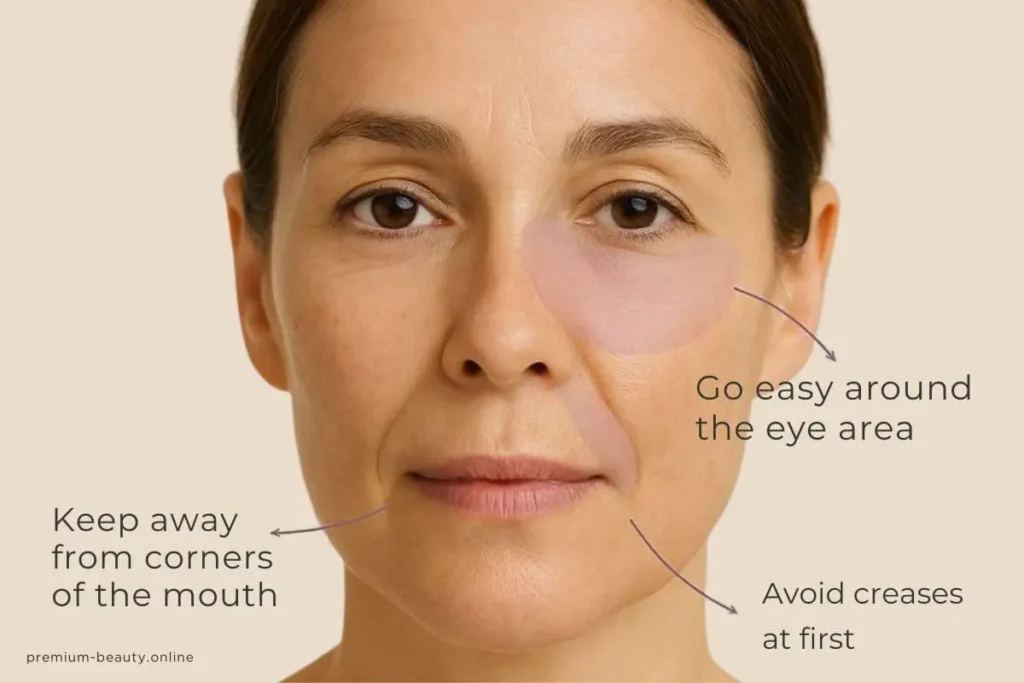
A calmer approach starts with a patch test on a small area of the cheek or jawline for a few nights, using only a pea-sized amount for the entire face and avoiding the eye contours and corners of the nose at first. If there is no significant stinging, intense redness, or burning, the serum can be introduced into the wider routine.

Many dermatology-informed routines suggest starting with two non-consecutive nights per week for the first two weeks, then slowly increasing to three nights, always monitoring for signs of tightness and flaking. This “low and slow” rhythm is particularly helpful for beginners and sensitive skin, because it allows time to adjust without pushing the barrier too hard.

Buffering techniques can also soften the initial impact. Instead of applying retinol on completely bare skin, beginners can start by layering a simple hydrating serum or light moisturiser first, letting it sink in, then adding the retinol serum, and sealing with another thin layer of moisturiser if needed.

This creates a more cushioned environment for the active, slightly slowing the rate at which it reaches living cells while still keeping it in contact with the skin. Some choose the “sandwich method”, moisturiser, retinol, moisturiser, when they know their skin is reactive or the climate is dry.

At the same time, the rest of the routine should remain simple. Introducing strong acids, high-strength vitamin C, or scrubs on the same nights as retinol usually increases the risk of irritation. For the first month, it is often best to keep the night routine to cleanse, a gentle hydrating step, retinol (on its assigned days), and moisturiser.

Sun protection is the non-negotiable partner of any retinol routine. Because retinol encourages renewal at the surface, the skin may become more prone to visible redness and discomfort from UV exposure.

A broad-spectrum sunscreen in the morning, reapplied as appropriate, is essential to protect the newly refined surface and to preserve the gains in texture and evenness. On nights when the skin feels tight, hot, very flaky, or stinging, it is better to pause retinol, focus purely on soothing moisturisers, and perhaps reduce frequency for a while.

Consistency over months matters more than a perfect schedule in the first few weeks. Beginners who respect these steps, start with an appropriate strength and build slowly, are much more likely to enjoy the benefits of the best retinol serums, while keeping discomfort and disruption to a minimum.

The 10 best retinol serums for youthful, radiant skin

How to read these product snapshots

Each product card focuses on what matters most in real-life texture, key actives, and who is likely to enjoy it. Concentrations are mentioned only when they are clearly disclosed by the brand or by ingredient databases that summarise official listings. Where claims rely solely on brand materials or retailer copy, they are labelled as brand claims rather than independent facts.

All options below are over-the-counter cosmetic products, not medical treatments. They may help improve the look of lines, uneven tone, and texture with consistent use, but they cannot replace prescription retinoids or in-office procedures. Always pair nighttime use with a broad-spectrum sunscreen during the day.

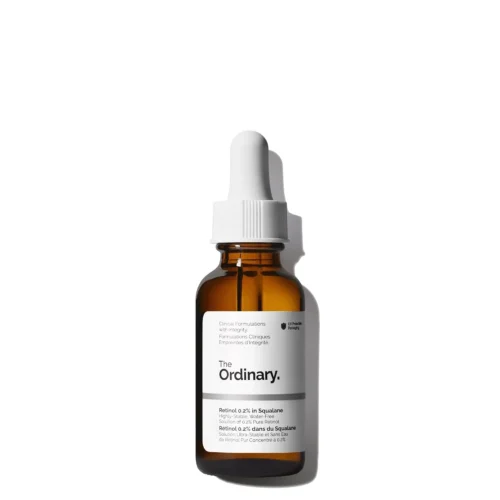
The Ordinary Retinol 0.2% in Squalane

Affiliate transparency, select links may generate a small commission for Premium Beauty Online at no extra cost to you.

Key activities 
This is a minimal, water-free formula with 0.2 percent retinol dissolved in a base of squalane, caprylic/capric triglyceride, jojoba oil, and a small amount of tomato and rosemary extract for antioxidant support.
The brand positions it as an entry level retinol for general signs of ageing such as fine lines and uneven skin texture.

Texture, scent, layering profile
The texture is a light to medium oil that feels richer than a gel serum but less heavy than a facial oil. There is no added fragrance, so the scent is a neutral, slightly fatty “oil” smell that disappears quickly on skin. Because it is anhydrous, it is best layered over a water-based serum and under or instead of a night cream, depending on how dry the skin feels.

Best for which skin type and concern
This formula suits normal to dry, non-sensitive beginners who want a very low retinol percentage and do not mind an oil finish. It may help improve the look of early fine lines and slightly uneven tone over several months of use, particularly when combined with daily sunscreen.
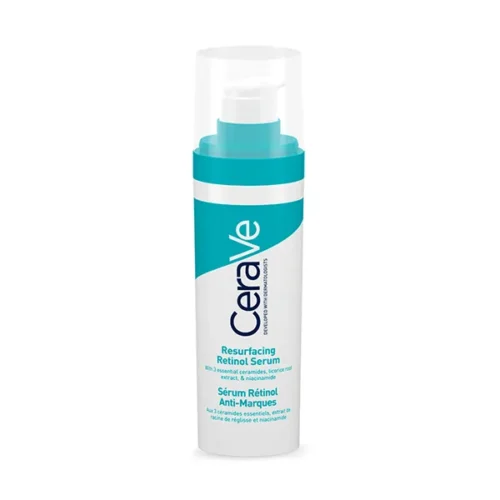
CeraVe Resurfacing Retinol Serum

Affiliate transparency, select links may generate a small commission for Premium Beauty Online at no extra cost to you.

Key actives 
This serum uses encapsulated retinol in combination with niacinamide, licorice root extract, hyaluronic acid, and three essential ceramides, supported by the brand’s MVE delivery system for slow release.
The exact percentage of retinol is not disclosed. The brand states that the formula helps reduce the appearance of post acne marks, minimise the look of pores and improve surface texture, which should be treated as a brand claim.

Texture, scent, layering profile
The texture is a lightweight milky gel lotion that absorbs quickly and leaves a soft, non greasy finish, without added fragrance.
It layers comfortably under a separate moisturiser and is easy to integrate in barrier focused routines thanks to the ceramides and niacinamide, which support the skin barrier while retinol works on texture.

Best for which skin type and concern
This option is well suited to combination to oily and blemish prone skin that deals with residual marks, mild texture and enlarged looking pores. The presence of niacinamide and ceramides makes it a good entry point for those who are nervous about retinol dryness but still want visible resurfacing over time.
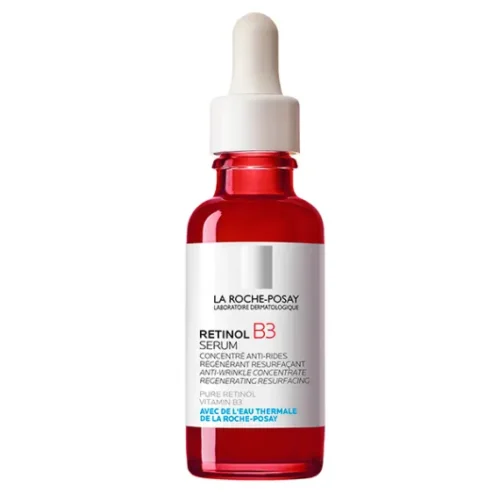
Affiliate transparency, select links may generate a small commission for Premium Beauty Online at no extra cost to you.

Key actives 
Retinol B3 Serum combines pure retinol with gradual release retinol and niacinamide (vitamin B3), in a glycerin rich base.
The brand describes it as targeting deep wrinkles, uneven tone and signs of photoageing on sensitive skin, with clinical results showing reductions in wrinkle visibility and improvements in tone and smoothness after two months. These numbers come from brand materials and press coverage and should be read as brand claim data rather than independent trials.

Texture, scent, layering profile
The texture is a light fluid serum that feels slightly emollient but not oily. It spreads easily and sinks in without a heavy film, which makes it comfortable under a night cream for drier skin or on its own for combination types. There is a light cosmetic scent rather than strong fragrance.

Best for which skin type and concern
This serum is a strong candidate for normal, combination and mildly sensitive skins that have clear photoageing concerns but cannot tolerate very aggressive textures. The dual form retinol plus niacinamide balance efficacy with comfort, and it is often recommended in derm guided routines for patients stepping up from drugstore basics.
Affiliate transparency, select links may generate a small commission for Premium Beauty Online at no extra cost to you.
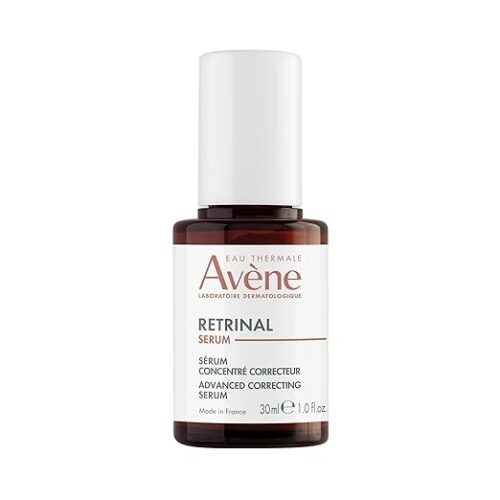
Key actives Despite the name, this formula is not a classic retinol serum. It is a bakuchiol, niacinamide and hyaluronic acid based serum, supported by pre tocopheryl (a vitamin E precursor) and Avène Thermal Spring Water, which the brand positions as a gentle plant derived alternative to retinol for visible signs of ageing. There is no retinol or retinaldehyde listed in the INCI. Any comparisons to retinol performance or irritation profile are therefore brand claims and should be read as such. Texture, scent, layering profile
The serum has a lightweight, fast absorbing emulsion texture that feels silky rather than oily and is designed for twice daily use. It layers smoothly under sunscreen in the morning and under a night cream in the evening, which makes it easy to position as a daily “support” serum on nights when traditional retinoids would be too much.

Best for which skin type and concern
This is best viewed as a retinol adjacent option for all skin types, including more sensitive and redness prone skins, that want help with dullness, mild uneven tone and early lines but do not wish to use true retinoids every night. It can also complement a classic retinol routine, for example used in the morning while a retinol cream is reserved for alternate evenings.
Read expert review

Affiliate transparency, select links may generate a small commission for Premium Beauty Online at no extra cost to you.

Key actives
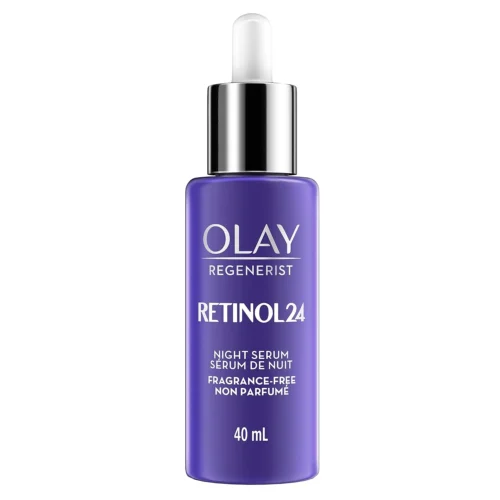
Retinol 24 Night Serum combines retinol, retinyl propionate and the brand’s well known niacinamide and peptide complex (including palmitoyl pentapeptide 4) in a silicone rich base that enhances spreadability.
The brand does not disclose precise percentages for the retinoids, describing instead “proprietary Retinol24 technology” and claiming visible improvements in fine lines, smoothness and brightness with regular use, which should be read as brand claims.

Texture, scent, layering profile
The texture is a silky serum with a noticeable slip from dimethicone that glides easily over skin and leaves a soft focus, non sticky finish. There is no added fragrance, so the experience is relatively neutral and compatible with more sensitive noses.
It sits well under richer creams or can act as the main active step in a minimalist night routine, especially on combination to normal skin.

Best for which skin type and concern
This serum works best for normal to slightly dry skins that want a one step night treatment combining proven actives like niacinamide, peptides and retinoids. The softer silicone texture can make the formula feel less harsh than some water based retinol serums, which helps many users ease into regular use while still working on the look of fine lines and uneven tone.
Affiliate transparency, select links may generate a small commission for Premium Beauty Online at no extra cost to you.
Key actives 
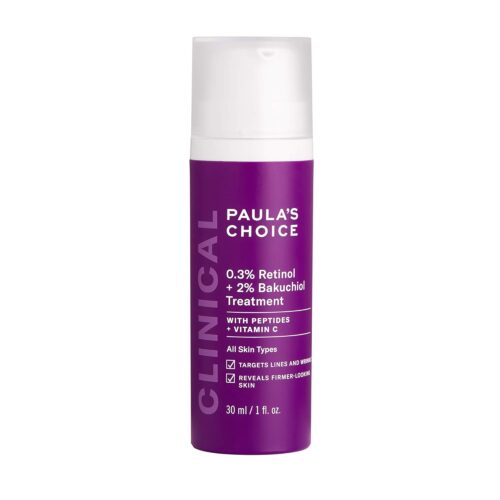
This treatment clearly discloses 0.3 percent retinol and 2 percent bakuchiol, supported by a peptide blend, ceramides and oil soluble vitamin C derivative (tetrahexyldecyl ascorbate).
The brand positions it for advanced visible signs of ageing such as deeper lines, loss of firmness and uneven tone.

Texture, scent, layering profile
The texture is a light cream serum that feels richer than a fluid but still spreads easily without heaviness. It is fragrance-free and designed to be used at night, either alone on oilier skin or under a moisturiser on dry to normal skin.

Best for :
This is best saved for experienced retinoid users with normal, combination, or slightly dry skin who already tolerate milder products. The combination of retinol plus bakuchiol and peptides makes it a true “treatment step” for those specifically targeting more pronounced lines and loss of firmness, with the understanding that results will still be gradual and cumulative over months rather than weeks.
Read expert review

Affiliate transparency, select links may generate a small commission for Premium Beauty Online at no extra cost to you.

Key actives 
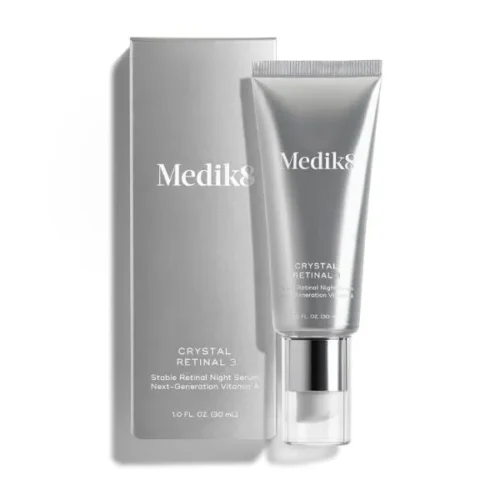
Crystal Retinal 3 uses 0.03 percent retinaldehyde, the direct precursor of retinoic acid, in a stabilised and encapsulated form.
The brand presents retinal as a next generation vitamin A that can deliver results up to eleven times faster than classic retinol, which is a brand claim rather than an independent consensus statement.

Texture, scent, layering profile
The texture is a creamy serum lotion that feels cushioned and slightly nourishing, more like a light cream than a thin serum. There is a subtle cosmetic scent that fits within the pampering positioning. It is designed to be applied at night only, usually after a hydrating serum and before or instead of a separate moisturiser, depending on skin dryness.

Best for which skin type and concern
Crystal Retinal 3 is marketed as the entry level strength in the Crystal Retinal ladder for users who already tolerate basic retinol and wish to step up, or for those guided by a professional to start directly with retinal. It suits normal to dry, photoaged skin that is comfortable committing to cautious introduction and diligent sunscreen use.
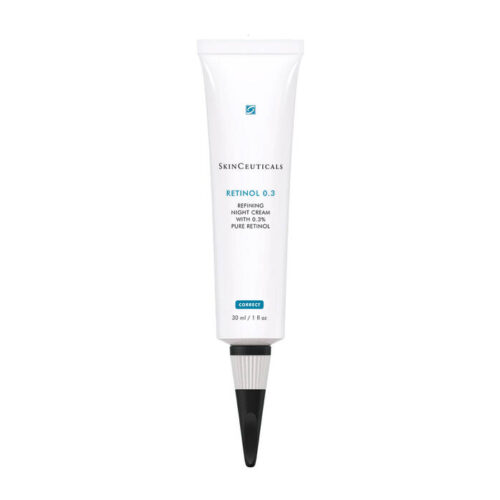
SkinCeuticals Retinol 0.3

Affiliate transparency, select links may generate a small commission for Premium Beauty Online at no extra cost to you.

Key actives 
SkinCeuticals Retinol 0.3 is a night cream featuring 0.3 percent pure retinol with a stabilised delivery system, plus soothing bisabolol and a moisturising base of emollients and humectants such as glycerin and soybean oil.
The brand states that it helps improve the appearance of fine lines, wrinkles, discolouration, blemishes and pores by accelerating cell turnover, a description that should be treated as a brand claim, though it aligns with the broader retinol literature.

Texture, scent, layering profile
The texture is a medium weight cream that feels initially rich but absorbs to a satin finish. It is packaged in an opaque tube to protect the retinol from light and air. There is a light cosmetic scent, not an overpowering fragrance. Most users apply it as the main night cream step, possibly over a hydrating serum if skin is dry or sensitive.

Best for which skin type and concern
Retinol 0.3 is positioned for first time retinol users who are ready for a clinically oriented formula and for those preparing their skin for higher strengths in the SkinCeuticals range. It is best suited to photoaged, non extremely sensitive skin that can commit to patient, long term use and daytime protection.
Affiliate transparency, select links may generate a small commission for Premium Beauty Online at no extra cost to you.

Key actives
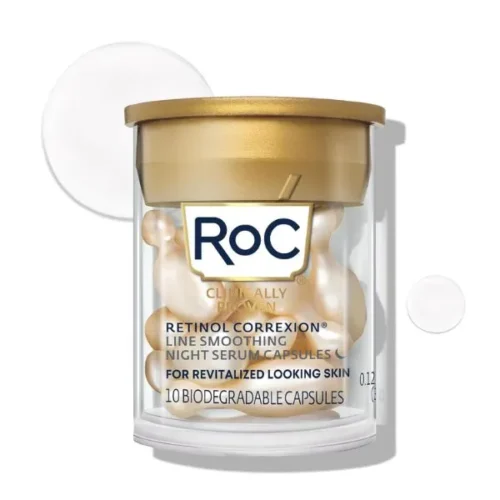
This formula uses pure RoC retinol in a silicone and soybean oil base, inside single dose biodegradable capsules that protect the retinoid from light and air.
The brand describes it as containing a high concentration of pure RoC retinol, but does not disclose an exact percentage, so any numerical estimates should be avoided. Clinical results cited by the brand, such as smoother looking skin after one night and visibly firmer, less lined skin after four weeks, are brand claims, not independent trials.

Texture, scent, layering profile
Each capsule delivers a silky, lightweight oil serum that spreads easily and leaves a velvety finish. The texture feels richer than a fluid serum but not as heavy as a facial oil. There is a mild cosmetic scent from the base rather than added perfume. It is intended for use at night only, on clean, dry skin, usually followed by a gentle moisturiser for those prone to dryness.

Best for which skin type and concern
These capsules are a good fit for normal to dry, resilient skin that wants a more intensive retinol experience in a convenient single dose format. Because the concentration is positioned as “high” and not stated, they are better suited to users who already tolerate retinoids and are comfortable introducing them slowly every few nights, with careful monitoring for irritation.
Affiliate transparency, select links may generate a small commission for Premium Beauty Online at no extra cost to you.

Key actives
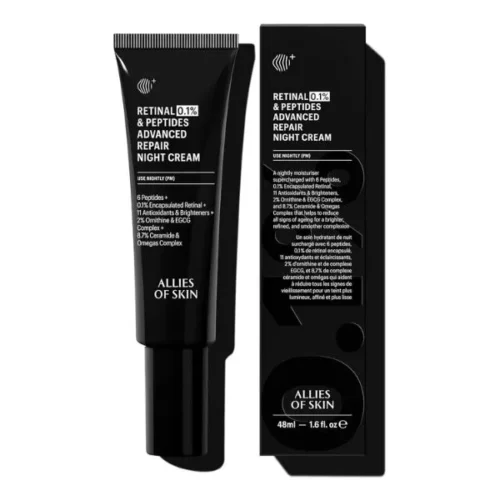
This night cream discloses 0.1 percent encapsulated retinal, combined with six peptides, 2 percent ornithine and EGCG complex, and an 8.7 percent ceramides and omegas complex, alongside ten antioxidants according to the brand.
The positioning is that of a high performance retinal formula designed to help improve the look of wrinkles, photo damage and uneven tone while supporting the barrier, which is a brand claim but consistent with how retinal functions in other cosmetic contexts.

Texture, scent, layering profile
The texture is a rich yet elegant cream that feels nourishing on application but absorbs well enough for most normal to dry skins to use it as their sole night cream. Users can add a hydrating serum underneath on very dry skin or keep the routine simple with cleanser plus this step. The scent profile is subtle and sophisticated rather than heavily perfumed.

Best for which skin type and concern
This formula suits experienced vitamin A users with normal, dry or mature skin who want a single, comprehensive night step that targets multiple signs of photoageing while maintaining the barrier. The combination of retinal, peptides, ceramides and antioxidants makes it a strong candidate for those who prefer to invest in one advanced product rather than layering several separate serums.

Matching each of the best retinol serums to real life routines

Once a suitable serum has been chosen, the next step is to place it into a routine that makes sense for daily life. For beginners, this usually means a simple night routine on retinol days, with a more minimal approach on non-retinol nights.

A basic framework could be, gentle cleanse, optional hydrating serum if skin feels tight, retinol serum, then moisturiser. Those using lighter, gel like retinol textures may prefer to apply moisturiser after the serum, while those with drier skin using creamier retinol formulas might find that the serum itself feels like a moisturiser and only need a thin extra layer on specific dry areas.

The key is to avoid layering so many products that the retinol becomes an afterthought or is diluted beyond usefulness.

Different concerns can be addressed by small adjustments within this framework. For early fine lines and mild dullness, the focus at night can stay on retinol and moisturiser, while the morning routine leans on antioxidants and consistent sunscreen.

When post blemish marks or uneven tone are part of the picture, a brightening serum with niacinamide or certain non irritating pigment care ingredients can be placed in the morning, leaving retinol nights uncluttered.

Mature or very dry skin often benefits from richer moisturisers on top of retinol, sometimes in the form of a cream with ceramides or a few drops of a non-fragranced oil on the driest zones, applied after the rest of the routine.

Those living in harsh climates, very cold or very hot and dry, may need to keep routines even simpler around retinol nights so the skin is not overwhelmed.

Frequency is where routine becomes truly personal. A common pattern for beginners is to use their chosen retinol serum twice a week for the first fortnight, then three times a week if the skin remains comfortable.

Some find that three nights per week is their ideal steady rhythm for many months, especially when using mid strength formulas. Others, with more resilient skin and excellent barrier support, may eventually move to every other night.

Morning routines should always include broad spectrum sunscreen, ideally as the final step after cleanser and any light antioxidant layers, because retinoid use and UV protection work hand in hand.

Within this structure, the ten curated serums in this guide can be slotted into different roles, some as very gentle entry points, others as second stage upgrades, but all with the understanding that consistency and patience matter more than chasing every new launch that appears on social feeds.

Common retinol mistakes beginners make and how to avoid them

A frequent beginner mistake is starting with too high a strength or applying too often. Stronger formulas or daily use from the first week can easily overwhelm a skin barrier that is not used to retinoids, leading to visible flaking, redness and a tight, uncomfortable feeling.

When this happens, some people conclude that retinol “does not suit them”, when in reality the routine simply advanced too quickly. Beginning with a low to mid strength serum, used twice per week and slowly increased, is usually kinder and more sustainable. Another related misstep is using far more product than needed.

A pea-sized amount is generally enough for the entire face, applied in small dots and spread evenly, keeping a little distance from the corners of the mouth, nose and eyes at first.

Another common error is underestimating the importance of moisturiser and sunscreen when using retinol. Because vitamin A derivatives can increase cell turnover at the surface, the outermost layers of the skin may feel drier and more vulnerable unless barrier support is in place. Skipping moisturiser, or relying on very light gels only, can leave the skin feeling stripped and more prone to visible irritation.

A comfortable, fragrance-free moisturiser that suits the skin type is a helpful partner for any retinol serum, whether applied as a buffer before and after, or as a final step. In the morning, broad spectrum sunscreen is essential, regardless of weather or season, as UV exposure can both increase visible sensitivity and undermine the improvements in texture and tone that retinol is working toward.

The third major trap is combining too many strong actives in the same routine, especially near the beginning. Layering retinol with high strength exfoliating acids, potent vitamin C serums and frequent scrubs can be too much at once, even for resilient skin, and often leads to stinging and redness.

For beginners, it is usually wise to choose one “lead” active for the night routine, in this case retinol, and keep the rest of the steps simple and soothing. Other actives can be positioned on alternate days or in the morning once tolerance is established.

By avoiding these three mistakes, going too strong, neglecting moisturiser and sunscreen, and mixing every intensive ingredient at once, beginners give themselves a calmer, more realistic chance to experience what the best retinol serums can offer over time.

Who should be cautious or avoid retinol serums

Although cosmetic retinol is widely available, it is not suitable for everyone at every moment. People who are pregnant, trying to conceive, or breastfeeding are often advised to avoid topical retinoids as a precaution, because vitamin A in excessive amounts has known risks when taken orally.

While the absorption from cosmetic retinol is far lower than from high-dose supplements, many dermatology and regulatory bodies recommend a cautious approach during these periods. In these cases, it is safer to focus on well-tolerated alternatives, such as niacinamide, certain peptides, and antioxidant serums, and to speak with a healthcare professional for personalised advice before using any vitamin A derivative on the face or body.

Similarly, anyone using prescription retinoids, strong in clinic peels or other medical treatments for the skin should follow their doctor’s guidance rather than adding a cosmetic retinol serum on their own.

Skin barrier status is another important filter. When the skin is already compromised, for example with active eczema, atopic dermatitis, severe rosacea flares, or a recent sunburn, retinol can feel like an extra insult on top of existing inflammation. In these situations, the priority is to calm and repair with fragrance-free, barrier-focused products and to avoid introducing new actives until the skin is comfortable again.

Even once things have settled, very reactive or rosacea-prone complexions may only tolerate the gentlest retinoid derivatives, or may decide that the trade-off is not worth it. For them, routines built around hydration, niacinamide, azelaic acid, or other dermatologist-recommended options might offer a more predictable path to maintaining an even, calm complexion without the same risk of flare-ups that retinoids can carry.

Certain lifestyle and environmental factors also call for extra care. Those who spend long hours outdoors, work in intense sun conditions, or struggle to apply sunscreen consistently may find that retinol makes their skin feel more vulnerable, because the surface can become more prone to redness and dryness when exposed to UV and wind. In such cases, a better sequence may be to first build a strong daily sunscreen habit and protective clothing routine, then gently introduce retinol later if still desired.

People with a history of severe allergic reactions to skincare, or who have experienced strong irritation from multiple retinoid products in the past, should approach with particular caution, patch testing carefully and being ready to step away if their skin clearly protests. Recognising these red flags early helps ensure that retinol is used as a thoughtful tool rather than an automatic step, and that those who are not good candidates are guided towards safer, more suitable options for their circumstances.

How long does it take to see results from the best retinol serums

Timelines are one of the most important pieces for beginners to understand, because retinol works on a slower rhythm than typical cosmetic promises suggest. In the first two to four weeks, the most common change is subtle, a slight increase in surface smoothness and a softer feel when the skin is well moisturised.

Some people notice a bit of purging, where pre-existing clogged pores come to the surface more quickly, although this is not universal and should not be extremely painful or widespread. Mild, manageable dryness is also common in this phase, especially if moisturiser and sunscreen are not yet fully optimised.

At this stage, the goal is not a dramatic transformation, but calm adaptation, where the skin learns to live with the new step without feeling constantly irritated.

Between roughly eight and twelve weeks of consistent use at a tolerable frequency, many users begin to see clearer visible changes. Fine lines around the eyes and mouth may look slightly softer, the overall tone may appear more even, and the skin can take on a steadier, more rested look when seen in good daylight.

Texture that once felt rough in certain areas often becomes more uniform, particularly on the cheeks and forehead. These shifts are usually subtle in the mirror from day to day, which is why some people find progress photos or simple notes helpful, for example, writing down how the skin feels each month. It is also important to remember that these improvements depend on support from the rest of the routine, including a well chosen moisturiser and daily sunscreen, because ongoing unprotected sun exposure can reduce or reverse much of the visible gain.

Beyond the three-month mark, retinol becomes more about maintenance and incremental refinement. Continued use can help sustain the smoother appearance achieved in the first months and may gradually improve the look of more stubborn fine lines and uneven tone over longer periods.

At the same time, the skin’s needs may change with seasons, stress and age, so it is wise to reassess strength and frequency every few months. Some people find that they can move from a beginner serum to a medium strength option once their skin is fully comfortable, while others discover that a gentle formula, used several times a week steadily, gives them all the visible benefit they need. The key principle is patience.

Retinol serums are long game products, and beginners who accept this timeline, instead of expecting overnight change, tend to experience less frustration and are more likely to stay with the routine long enough to enjoy its full cosmetic value.

How to shop and compare retinol serums like a beauty insider

Shopping for retinol can feel like decoding a new language, but a few simple checks make the process far easier. The first is to look for clarity on the type of retinoid being used, ideally listed as retinol, retinaldehyde, a defined ester, or a named retinoid such as hydroxypinacolone retinoate, rather than vague terms like “pro youth complex” with no detail.

Packaging should be opaque or at least tinted, preferably with an airless pump, because vitamin A derivatives are sensitive to light and air. A clear usage guideline on frequency and application is another good sign, since brands that invest in thoughtful formulas often offer realistic, cautious instructions rather than promising overnight change.

The next layer is the supporting cast of ingredients. For beginners, the best retinol serums usually combine their active with hydrating and barrier-friendly components such as glycerin, hyaluronic acid, ceramides, squalane, or plant oils, depending on skin type.

Soothing ingredients like panthenol, bisabolol, madecassoside, or colloidal oat can help the skin feel more comfortable as it adjusts. Heavy fragrance, drying alcohols high on the list, or an overload of other strong actives in the same formula can be yellow flags, especially for sensitive or reactive complexions.

A shorter, well-balanced ingredients list is often easier for the skin to accept than a formula that attempts to include every trend at once.

Finally, context matters just as much as the bottle. A pharmacy option with modest packaging but a coherent formula can perform very well for many people, particularly if it is easy to repurchase and fits the budget, while a luxury serum may offer a more refined texture, elegant packaging, and a sensorial experience that encourages consistent use.

The choice between these levels should be guided by values, texture preferences, and long-term commitment rather than the assumption that the highest price always equals the best results.

A good approach is to compare formulas by their ingredients, stability, guidance, and how they fit into an existing routine, then select one or two options to test over several months. In this way, the ten serums highlighted in this guide become starting points for informed exploration, rather than rigid rules, and readers can make choices that feel aligned with both their skin and their lifestyle.

Conclusion, a calm path to retinol confidence

For beginners, retinol does not have to feel like a risky experiment. With a clear understanding of what cosmetic retinol can and cannot realistically do, it becomes easier to place this ingredient in its proper role, a long term texture and tone refiner rather than a quick fix.

Seeing retinol as one member of the vitamin A family, and as one step within a whole routine, helps take the pressure off a single bottle and brings focus back to consistency and skin comfort.

Choosing among the best retinol serums then becomes an exercise in matching, not guessing. By aligning strength, texture and supporting ingredients with skin type and current barrier health, most people can find a formula that feels both effective and reassuring to use.

A gentle introduction schedule, thoughtful moisturiser support and daily sunscreen create the conditions in which retinol can quietly do its work over weeks and months. Mistakes such as starting too strong, mixing every active at once or ignoring sun protection are avoidable when beginners have calm, structured guidance.

Ultimately, retinol works best as part of a broader approach to skin health that includes realistic expectations, protective habits and products chosen with care rather than impulse.


FAQ

Q1. Is it safe for beginners to use retinol serums every night?

For most beginners, using a retinol serum every night from the start is too much for the skin barrier. Many dermatology informed routines recommend beginning with two non consecutive nights per week, then slowly increasing frequency if the skin remains comfortable.

Over time, some people can build up to every other night or nightly use, but this should be guided by how the skin feels, not by a fixed rule. Signs such as persistent burning, strong redness or intense peeling are signals to reduce frequency or pause, while mild, short lived dryness is more common and often manageable with moisturiser support and sunscreen in the morning.

Q2. What percentage of retinol is best to start with?

There is no single ideal percentage for everyone, but many beginners do well with lower strengths at first. Cosmetic retinol serums often start around 0.1 to 0.3 percent, with higher strengths reserved for more experienced users. Beginning with a lower percentage helps the skin adjust and reduces the risk of marked irritation, especially when combined with a gradual introduction schedule.

Once tolerance is established and the routine feels stable, some may choose to move to a slightly higher strength if they want more intensive texture refinement, while others find that a gentle formula, used consistently, provides enough visible benefit.

Q3. Can you use retinol with vitamin C in the same routine?

Retinol and vitamin C are both popular cosmetic actives, but they can be demanding on the skin, especially when high strength formulas are used. Many people prefer to separate them by time of day, vitamin C in the morning and retinol at night, which can be more comfortable and easier to maintain.

For beginners, this separation helps reduce the chance of irritation and keeps each step clear. Once the skin is well adjusted and comfortable with both, some may be able to use appropriately gentle formulas in the same routine, but it is usually safer to build up to that combination rather than starting there.

Q4. Are retinol serums suitable for sensitive skin?

Sensitive skin can sometimes use retinol, but the approach needs to be particularly cautious. Choosing formulas specifically designed for sensitive or reactive skin, often cream-based with soothing ingredients and lower-strength retinoids, is a gentler starting point.

Patch testing on a small area, using very small amounts, and introducing the product once per week at first can make a significant difference. If the skin develops persistent burning, swelling, or marked redness, it is better to stop and focus on barrier repair instead. For some very sensitive or rosacea-prone individuals, gentler alternatives, such as certain peptides or other dermatologist-recommended actives, may be more comfortable long term than retinol itself.

Q5. Will retinol make wrinkles worse before they look better?

Retinol does not increase wrinkles in a structural sense, but the temporary dryness and flaking that can appear in the early weeks may make fine lines look more visible in some lights. This effect is usually linked to surface dehydration and irritation rather than a true worsening of underlying lines.

With a gentle introduction, good moisturiser support, and regular sunscreen use, this phase can often be minimised or avoided. Over time, well-formulated cosmetic retinol serums may help improve the look of fine lines and texture when used consistently, although they cannot erase deep expression lines or replace in-clinic procedures.

Q6. Do you have to stop using retinol in summer?

Retinol can be used year round, including in summer, provided that broad spectrum sunscreen and other sun protection habits are in place. Because retinoid use can make the skin surface feel more sensitive, daily sunscreen becomes even more important to protect against visible redness and pigment changes.

Some people prefer to reduce frequency or strength during very sunny holidays or outdoor intensive periods, while others maintain their routine with extra attention to hats, shade, and reapplication. For beginners, the priority is always to ensure a solid sun protection habit before or alongside any retinol plan, since UV exposure is a major driver of visible skin ageing.

Q7. Can teenagers or very young adults use retinol serums?

Very young skin usually does not need cosmetic retinol for general anti aging purposes, because natural cell turnover is already relatively active. In teenagers and young adults, retinoids are sometimes used under medical supervision for specific concerns, such as acne, using prescription products and guidance tailored to the condition.

For general cosmetic use, it is often more helpful at this age to focus on basic habits, gentle cleansing, moisturising, and regular sunscreen, reserving retinol serums for later years when fine lines and sun-related changes become more visible. Anyone considering retinoids for an ongoing skin condition should consult a healthcare professional rather than relying on over-the-counter products alone.

Premium Beauty Online – Anti-Aging Skincare Reviews & Expert Guides
Logo
Privacy Overview

This website uses cookies so that we can provide you with the best user experience possible. Cookie information is stored in your browser and performs functions such as recognising you when you return to our website and helping our team to understand which sections of the website you find most interesting and useful.

Check our privacy policy!

Shopping cart